Alana Lowell
Broken Rejected MateAlana Lowell is a compassionate yet capable alpha female whose importance lies less in formal power than in the shelter she creates for others. She is a family aunt, a former best friend of Sierra Langford’s mother, and a mother whose life is shattered when Ronald Lowell kills Andrew Lowell and leaves Anthony Lowell traumatized. Across the story, her tenderness repeatedly operates alongside strength: she welcomes difficult truths, helps guide the younger wolves through transformation, stays present during grief, and continues trying to protect her surviving son after catastrophe.
Identity and Family Background
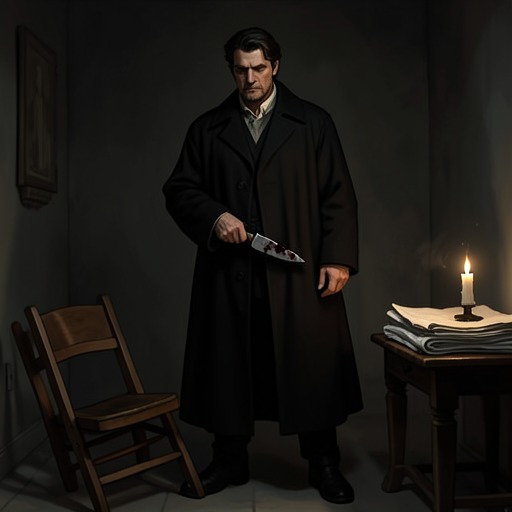
Alana Lowell is described as a small, petite woman with midnight-black hair and brown eyes. Her physical delicacy contrasts with her status as a worthy alpha female: kindness does not make her weak, and she can become fierce when circumstances demand it. This contrast defines her place in the family. She is gentle in ordinary interactions, but she possesses the authority and resolve expected of an alpha woman within the wolf community.
Her bond with Sierra Langford is rooted in shared loss. Alana was Sierra’s mother’s best friend before her death, and the friendship was so close that Sierra was named after Alana. The two women are therefore connected not only by family association but by the memory of someone they both loved deeply. Sierra’s relationship with Alana is described as especially close, shaped by mutual bereavement and by the sense that each carries part of the absent woman’s legacy.
Alana is also the mother of Anthony Lowell and Andrew Lowell. Her identity as a mother becomes central to the later tragedy, because the twins’ safety, health, and emotional survival are repeatedly matters of urgent concern. The story places her maternal care beside Ronald Lowell’s failures as a father, making their relationship an increasingly painful contrast between protection and destruction.
Guidance During the First Shift
Alana participates directly in the family’s preparation for the younger wolves’ first transformation. After asking around, she determines that Alan Lowell, Andrew Lowell, and Anthony Lowell are the only ones showing signs of an impending first shift. She presents this not as an ordinary milestone but as a private, life-altering passage that will belong exclusively to the three boys and demonstrate their strength and special status.
Her plan is practical as well as ceremonial. The boys are to move into the woods within an hour, where Alana and Ronald will remain with them throughout the change. Once the transformations are complete, the pack will hold a run so that the newly shifted wolves can run freely in their full wolf forms. Alana becomes visibly emotional while explaining the ritual, wiping away a tear as she expresses happiness and pride. The scene shows her treating transformation as both a biological ordeal and a communal inheritance: the younger generation is being guided into pack identity under the watch of those who already understand its dangers.
That role also reveals how Alana combines emotional openness with responsibility. Her tears do not interrupt the preparations; they make clear what the event means to her. Pride, fear, and affection coexist in her response, and the younger characters answer her emotion with laughter, preserving the intimacy of a family moment even as they approach a dangerous threshold.
Care as an Everyday Practice
Alana’s care is most visible when Sierra is grieving. After Doherty Langford’s death, Sierra spends nearly two weeks isolated in Alan’s room at the Lowell family home, unable to resume ordinary life. Alana gently asks whether Sierra would like to go for a walk. Sierra refuses, saying that she needs to lie there for a while, and Alana does not force her to participate. Her offer matters because it recognizes Sierra’s need without treating withdrawal as disobedience.
Sierra compares Alana to the mother she never had, an association that deepens the older woman’s role from affectionate aunt to substitute maternal presence. Alana’s care is not presented as a single dramatic rescue. It is patient and nonintrusive, leaving Sierra room to grieve while making companionship available. This is especially significant because Sierra has been told that she must be strong despite being only eighteen and newly orphaned. Alana’s presence provides an alternative to that demand: she does not require Sierra to perform recovery before she is ready.
Alana also approaches Sierra directly after the latter’s attack on Anthony Lowell leaves him unconscious and injured. Caroline reports that Tony is lying in pain with his arm bandaged and has not yet awakened. Sierra feels intense guilt because she believes the injury is her fault, and she cannot bear to ask Alan or Alana about him while seeing their pain. Alana nevertheless enters Sierra’s space and treats her kindly, despite being Anthony’s mother. The gesture does not erase the injury or Sierra’s responsibility, but it keeps care from collapsing into immediate condemnation.
This pattern places Alana within the story’s broader ethics of emotional labor. She repeatedly absorbs fear, grief, and uncertainty while continuing to make space for others. Her kindness is not sentimental blindness: she is the mother of the injured boy, yet she can distinguish between acknowledging harm and abandoning the person who caused it.
Maternal Loss and the Cost of Ronald’s Violence
The most devastating image associated with Alana comes after Andrew Lowell is killed by his own father. Andrew’s last words are directed toward the people he loves, and Anthony responds with an anguished howl. A second howl rises elsewhere on the pack grounds, followed by a mother’s scream of pain. The narrative identifies that voice as Alana’s. Her grief is therefore heard across the territory before she is physically seen, turning maternal loss into a sound that the entire pack must recognize.
Andrew’s death is made still more terrible by the fact that the killer is Ronald, Alana’s mate. She loses her son through the violence of the man who should have shared responsibility for protecting their family. The event destroys any simple division between domestic life and pack conflict: Ronald’s corruption enters the family itself, and Alana becomes both the mother of the dead wolf and the partner of the murderer.
Afterward, Alana collapses from shock and is taken to the healer. She does not allow her wolf to heal her, a refusal described as something that usually occurs when a werewolf has given up on life. Her condition places her grief on the edge of physical death. The consequences extend beyond her own suffering, because Anthony is left without Andrew and remains silent after his brother’s death. Sierra hopes Alana will recover not only for her own sake but for Anthony’s, who has almost no family left apart from Alan Lowell.
Relationships and Narrative Significance
Alana’s relationship with Sierra is built from remembrance, chosen kinship, and sustained caretaking. She links Sierra to her dead mother, but she does not reduce Sierra to that inheritance. By offering walks, conversation, and quiet acceptance, she becomes a living maternal refuge during a period when Sierra has lost her biological father and is struggling to survive repeated supernatural and emotional upheavals.
Her relationship with Alan Lowell is also protective. When Sierra fears that her father’s death may force her and Alan to leave, Doherty assures her that they will not move and that he understands the pain of losing a mate. Although that reassurance belongs to Doherty, Alana’s wider role in the Lowell household helps make the family a place where Sierra can remain during mourning. After Doherty’s funeral, Alan holds Sierra at night and ensures that she eats, while the family gives her space; Alana’s earlier invitation and continued presence form part of that collective support.
Alana’s connection with Anthony becomes most visible in the aftermath of Andrew’s death. At Noah Collins’s house, everyone waits for the antidote to revive Anthony Lowell, including his mother and brother. When Noah brings Alana and Andrew inside to witness Anthony opening his eyes, Alana’s cry of relief announces that he has awakened. The moment briefly reverses the earlier cry of maternal anguish: one sound marks the loss of a son, while another confirms that the other son may still live.
Even after Andrew’s traditional werewolf burial, Alana’s recovery remains uncertain. She is still with the healer and has not responded to treatments, while Anthony refuses to speak to anyone. When Anthony later decides that he must leave because every step reminds him of his twin, Sierra asks about his mother. Anthony replies that he has spoken to her and believes she will get better, calling her strong and comparing her recovery to his own. Alana thus remains an unseen but decisive emotional center in his attempt to continue living.
Change, Endurance, and Thematic Role
Alana’s arc is not a conventional rise to power. Her significance comes from the way catastrophe tests the forms of care she has practiced from the beginning. She starts as the affectionate aunt who can cry with pride over a first shift, continues as the woman who offers Sierra companionship without coercion, and becomes the mother whose scream records the consequences of a father’s betrayal. Her gentleness survives, but it is no longer innocent; it has been forced to carry knowledge of injury, guilt, and irreversible loss.
The character also gives the story a particularly clear contrast between care that preserves life and authority that destroys it. Alana’s alpha status is expressed through guidance, protection, and emotional steadiness, whereas Ronald’s paternal and alpha power culminates in the killing of his own son. The contrast is not merely between a good woman and a bad man. It is between two uses of family authority: one makes room for transformation and recovery, while the other turns power inward against the family it should defend.
By the end of the available account, Alana has not received a neat resolution. She remains under the healer’s care, physically and emotionally endangered by Andrew’s death, while Anthony prepares to leave and the wider pack confronts Ronald’s crimes. Her uncertain survival gives the aftermath its human cost. Alana represents the people who do not control the violence but must live through its consequences, and whose continued presence offers the possibility that family can endure even after the person who held it together has been taken away.